Global Talent Visa UK: eligibility, requirements and how to apply
No sponsor, no job offer, no salary threshold. Everything you need to understand eligibility, endorsement, evidence, cost and the path to settlement, in one place.
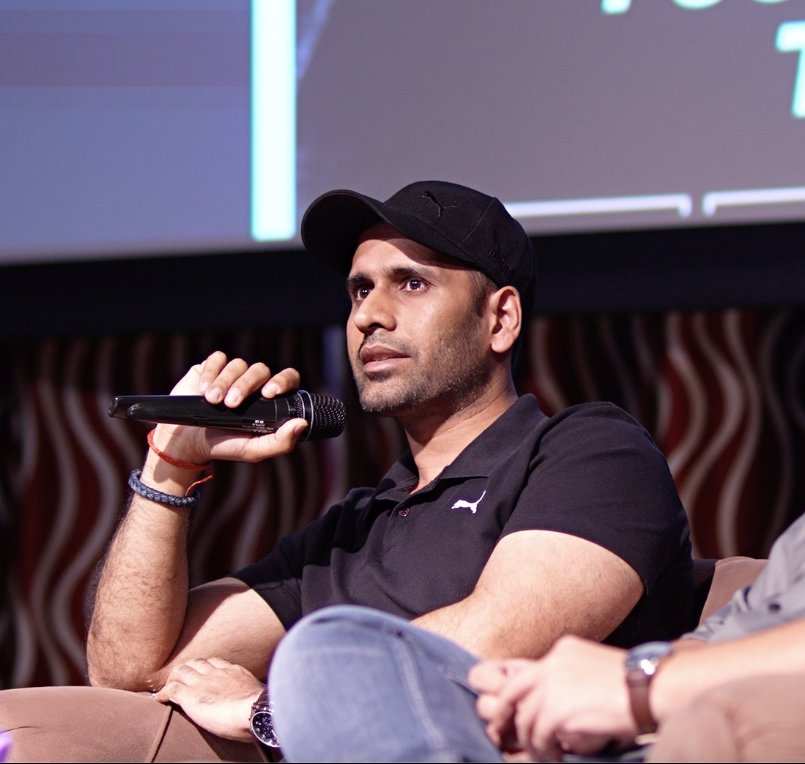 Shailendra Pathak
Updated 23 July 2026
22 min read
Shailendra Pathak
Updated 23 July 2026
22 min read

If you've researched UK work visas, you've probably run into the same wall: most routes need an employer to sponsor you, a job offer in hand, and a salary that clears a government threshold. The Global Talent Visa is different by design. It exists for people whose track record speaks for itself, technologists, researchers, scientists, and founders, and it removes the sponsor entirely. You apply on your own merit, endorsed by a designated UK body, and you hold the visa yourself.
Global Talent is a two-stage route: win an endorsement from the designated body for your field, then apply for the visa itself. Stage 1 (endorsement) is where applications are won or lost, the visa stage that follows is largely administrative.
This guide walks through the entire journey: who qualifies, how endorsement bodies actually score evidence, what documents you need, what it costs, how long it takes, and the mistakes that sink otherwise-strong applications. Use the contents on the right to jump to any section.
01.Exceptional Talent vs Exceptional Promise
The visa has two grades. Choosing the right one shapes your entire evidence strategy.
Both grades grant identical rights to live, work and bring family to the UK. The only difference is your career stage and how long you wait for settlement.
For people already recognised as leaders in their field, with an established track record of impact.
For earlier-career applicants with clear evidence of trajectory, not yet a recognised leader, but heading there fast.
A common mistake: senior applicants under-position themselves as "Promise" out of caution, adding two unnecessary years to their settlement clock. If your peer recognition, seniority and independent evidence are strong, apply for Talent, endorsing bodies assess the evidence you submit, not your own modesty.
02.Who should, and shouldn't, apply
- Senior engineers, researchers or scientists with 5+ years of recognised impact
- Founders with real traction, funding or a shipped product used at scale
- Academics with published, cited work in a relevant field
- People who want to switch jobs, freelance or found a company freely in the UK
- Applicants who can gather 3 credible, specific recommendation letters
- People with low or no experience and just starting
- Anyone expecting a fast, evidence-light process, this route rewards preparation
- Applicants who need a UK job in hand before they move (Skilled Worker fits better)
- Fields outside the five endorsement categories (see below)
- Anyone unwilling to gather third-party evidence of their standing
03.Endorsement bodies and eligible fields
Your application is routed to one designated body depending on your field. Each has its own published criteria and reviews evidence on a rolling basis.
| Endorsing Body | Field | Typical Decision Time |
|---|---|---|
| Tech Nation successor (DSIT-appointed) | Digital technology, engineering, product, AI, data, cyber security | 4–8 weeks |
| Royal Society | Natural sciences and medical research | 6–8 weeks |
| Royal Academy of Engineering | Engineering (all disciplines) | 6–8 weeks |
| British Academy | Humanities and social sciences | 6–8 weeks |
| Arts Council England | Arts and culture, architecture, fashion, film, music, literature | 3–6 weeks |
| UKRI (fast-track) | Research fellowships and grant holders | Case-by-case, often faster |
Founders, product managers, investors and startup operators are almost always assessed under the digital technology category, using commercial and technical criteria rather than pure research output.
04.What endorsers actually score
Every field has its own worded criteria, but they reduce to the same test: has your field noticed your work, independently of you saying so. You must meet the mandatory criterion, plus at least two optional criteria (exact numbers vary slightly by body and grade).
- Recognised as a leading talent in your field (Talent), or as having potential to be one (Promise)
- Significant technical, commercial or entrepreneurial contributions
- Research endorsed by a recognised, senior figure in the sector
- Recognition beyond your day job, talks, publications, open source
- A track record of progression, with measurable outcomes
Independent recognition beats self-authored proof every time. A letter from someone who owes you nothing outweighs a folder of things you produced yourself.
05.The evidence hierarchy
Not all proof carries equal weight with an assessor. Roughly ranked from strongest to weakest:
Recommendation letters, where most cases are decided
You need three letters, and they carry more weight than any other document. The strongest come from senior figures who genuinely know your work and can describe its impact with specifics, a launch, a paper, a decision they saw you make. Generic "great colleague" letters are the single most common reason for refusal, because they read as favours rather than evidence.
Do not use template letters. Endorsing bodies review thousands of applications and recognise recycled phrasing instantly. Every letter should describe one or two concrete moments, not a general character reference.
06.Document checklist
Personal statement
~1,000-word narrative connecting your evidence into one argument
CV
3 pages, structured for an assessor unfamiliar with your niche
3 recommendation letters
From senior, credible figures in your field
10 evidence items
Awards, press, patents, talks, citations, adopted work
Passport / ID
Valid for 6+ months from application date
Proof of funds (if requested)
Maintenance funds for you and dependants
07.The process, end to end
Profile evaluation
Map your strongest evidence against the criteria and choose Talent vs Promise.
Evidence and documentation
Draft the personal statement, structure the CV, secure and refine recommendation letters.
Stage 1, Endorsement
Submit via GOV.UK; the Home Office routes your evidence to the relevant endorsing body.
Stage 2, Visa application
Once endorsed, apply for the visa itself, biometrics and a decision typically within 3 weeks.
Settlement and beyond
Continuous residence toward ILR at the 3- or 5-year mark, then citizenship 12 months later.
08.Costs and fees
For a full 5-year grant, total government cost is typically £5,900–£6,000 per applicant (£561 + £205 + five years of IHS), excluding legal or advisory fees. Dependants pay the same visa fee and IHS rate. There is no fee for the endorsement extension letter if your circumstances change mid-process.
09.How it compares to other UK routes
| Route | Sponsor needed | Path to settlement | Job tied? |
|---|---|---|---|
| Global Talent | No | 3–5 years | No |
| Skilled Worker | Yes | 5 years | Yes |
| Innovator Founder | No (endorsed business) | 3 years | No, but tied to the business |
| Scale-up Visa | Yes (sponsoring scale-up) | 5 years | Partially |
| High Potential Individual | No | None, 2-year non-extendable | No |
The trade-off is clear: Global Talent gives up nothing in flexibility, but demands more upfront evidence than a sponsored route where an employer effectively vouches for you.
10.Dependants, work and business rights
- Family included. Partners and dependent children can apply alongside or after you, with full work, study and NHS rights from day one.
- No employer tie. Switch jobs, freelance, consult or take a career break without informing the Home Office.
- Start a company. Found, invest in or run a UK business with no restriction.
- Buy property. No visa-related restriction on property ownership.
- Travel freely. No cap on time spent outside the UK, unlike some settlement routes, though extended absences can affect continuous residence for ILR.
11.Path to ILR and British citizenship
Exceptional Talent holders can apply for Indefinite Leave to Remain (ILR) after 3 years of continuous qualifying residence; Exceptional Promise holders after 5 years. Citizenship by naturalisation is typically available 12 months after ILR is granted, provided residence requirements are met throughout. Total timeline from visa grant to passport: 4 years for Talent, 6 years for Promise.
12.Common mistakes that sink strong applications
Treating it like a résumé
Endorsers evaluate an argument, not a bullet list.
Generic recommendation letters
"Good colleague" letters read as favours, not evidence.
Wrong tier selection
Senior profiles under-position for Promise when Talent fits.
Copy-paste templates
Endorsers spot recycled applications immediately.
Applying too early
A refusal stays on record, sometimes "wait 3 months" is the right call.
Ignoring commercial impact
Endorsers reward scale of adoption, not just code written.
A senior backend engineer with no press, no awards, no patents
Seven years at recognised companies, strong internal reputation, zero external visibility. Over 10 weeks: two technical articles placed in industry publications, one conference talk secured, and recommendation letters rebuilt around specific, named outcomes instead of general praise.
"The work didn't change. What changed was whether anyone outside the company could see it."
13.Frequently asked questions
14.Glossary
- Endorsement
- Stage 1 approval from a designated body confirming you meet the criteria.
- ILR
- Indefinite Leave to Remain, UK permanent residency.
- IHS
- Immigration Health Surcharge, a mandatory NHS access fee paid upfront.
- Exceptional Talent
- Grade for established leaders; 3-year path to ILR.
- Exceptional Promise
- Grade for rising talent; 5-year path to ILR.
- Continuous residence
- Unbroken qualifying UK residence required for settlement.
Shailendra is himself a founder & CEO of AI Healthtech company and has more than 6 years of UK experience among the venture capitalists, founders, startups and visa related bodies
See where your evidence actually stands
Take the free AI-powered eligibility check, your endorsement score out of 100 with honest feedback on weak areas, in under 3 minutes.
Check Eligibility →